
New Year’s is the time when we hear the most about making resolutions. Everyone is asking, what are your New Year’s Resolutions? What do you want to change in 2026? Often, this feels like it only applies to your personal life, but New Year’s Resolutions aren’t just for setting personal goals. The start of a new year is the perfect opportunity to set your professional goals. With clear, deliberate planning, you can take your food safety plans to the next level this year.
Why Setting Food Safety Goals Matters
Goals can positively impact your work life. Achieving successful goals can prevent last-minute stress and rushing. For instance, without clear documentation and planning, audits can be a highly stressful experience. Having a clear, direct goal in mind when preparing your facility audits sets the stage for success. Setting food safety goals is a preventive measure that benefits food safety operations over the long term.
Step 1: Reflect on the Past Year
When creating New Year goals, it is important to reflect on the previous year’s successes and failures. Before setting new goals, reflect on the previous year.
- What went right?
- What went wrong?
- What were the big challenges of 2025?
- Were there any goals of 2025 that were not met? Or any goals that were met?
The chart below is a great way to structure your reflections of the past year.
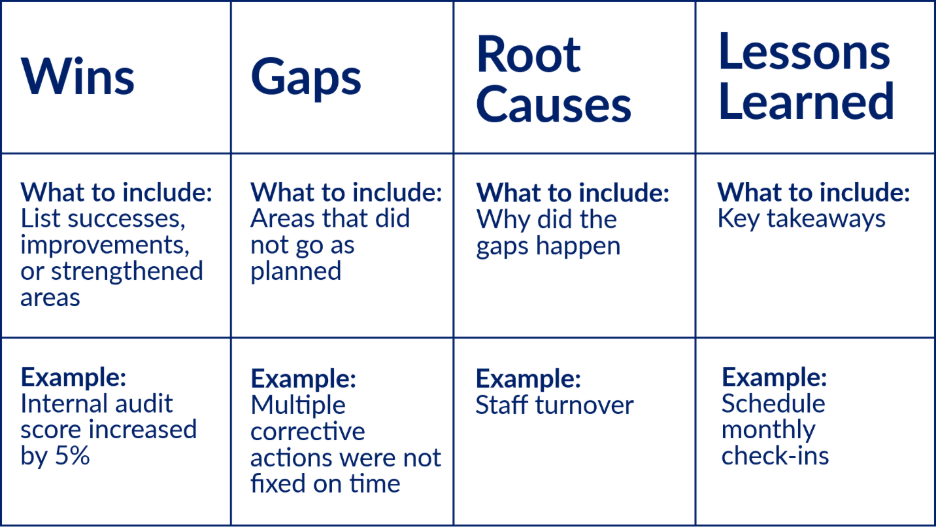
Step 2: Set SMART Food Safety Goals

SMART goals stand for Specific, Measurable, Achievable, Relevant, and Time-bound — a framework that establishes clear, identifiable goals. Here is an example of an unclear goal reworked into a SMART Goal.
Unclear Goal: I want my department to have a better food safety culture.
SMART Goal: From January to December 2026, I will conduct 12 one-hour interactive monthly training sessions for all team members in my department on food safety culture. Success will be measured by an attendance rate of greater than 90%, post-training knowledge quiz scores of 80% or higher, and reduced food safety culture audit findings. I have resources, approval, and training materials available. I will schedule the 12 one-hour sessions and ensure that backup presenters and I are available. Training sessions will occur during the first week of each month with quarterly reviews to ensure positive progress.
Why this works:
Specific: Identified the who, what, and how. Who is involved, what is happening, and the format.
Measurable: Attendance, quiz success rates, and audit findings are indicators of advancement.
Achievable: Time, resources, approval, and materials are planned.
Relevant: An improved food safety culture leads to fewer violations, stronger audits, and greater employee retention.
Time-bound: A set monthly schedule from January to December 2026 with quarterly reviews.
Step 3: Break Goals Into Actionable Steps
Research shows that over 80% of people perform better when working toward a specific, challenging goal. Not only does it show performance increases, but research also shows that employees who actively set goals are 3.6x more likely to be committed to their company. Below is a list of five actionable steps to take with your goal.
- Define the goal
- List daily, weekly, and monthly tasks
- Contact individuals involved in the goal
- Set check-in dates
- Track progress
Utilize the tools available to you to make achieving your goal easier. Tools like Google Sheets or Excel are great ways to keep track of and monitor your progress. They are also shareable with others to keep all members accountable. Another tool at your disposal is the ability to set automatic check-in reminders. When creating your goal, set calendar reminders to alert you to weekly, monthly, and quarterly check-ins.
Remember, you want your goal to succeed, and in order to do that, you need to integrate your tasks and check-ins into your workflow. When adding these items to your schedule, ensure you can still conduct your day-to-day operations.
Step 4: Build a Support System
Rely on the individuals around you; you don’t have to accomplish goals on your own. Research suggests that when you involve others in your goal, you are more likely to succeed. Think about who on your team you want to be your accountability partner. This could be a coworker, a team member, or even your supervisor. Now is the time to share your goal with those around you rather than trying to accomplish it all on your own.
Step 5: Monitor, Adjust, and Celebrate
Once a goal is set, it is important to do the following three things: monitor, adjust, and celebrate. As the year progresses, take time to monitor your goal and make adjustments as necessary. When adapting your goal, follow the same steps you used to create it, ensuring it aligns with the SMART criteria. Additionally, celebrating milestones can lead to greater success. Positive reinforcement has been shown to increase behavior and maintain motivation. For instance, in the previous SMART goal example on food safety culture, positive reinforcement and celebration could occur at quarterly milestones or when everyone achieves 100% on the knowledge quizzes.
Common Pitfalls and How to Avoid Them
Common pitfalls when creating New Year goals include setting too many goals, setting non-specific goals, lacking support, and failing to track progress. Best practices for avoiding these issues include setting highly intentional, specific goals. This will limit setting too many nonspecific goals. Also, sharing goals with the team and support system will boost accountability and follow-through. When creating the goal, include a tracking system, whether that means writing down check-in dates or adding reminders to a calendar.
Putting Your Food Safety Goals Into Action
Ready to start the year strong?
Safe Food Alliance offers resources, training, and consulting services to help you achieve your goals. Take control of 2026 with Safe Food Alliance by your side.
Explore our upcoming trainings and resources to get started.